Confirm the input.
Review the complete loaded plate assembly, force, duration and temperature requirements. These determine whether HiG and the proposed handling equipment fit this particular operation.
Explore robot-accessible centrifugation and sample handling around your cell-processing requirements.

Begin with your cell-processing method, vessels and centrifugation requirements. Discuss how robotic access could fit the process and controls you already use.
Talk through your workflowFor a process using supported plate-format labware, discuss a configuration that connects handling and a required spin around the operating window defined by your team.
Review the complete loaded plate assembly, force, duration and temperature requirements. These determine whether HiG and the proposed handling equipment fit this particular operation.
In a compatible Hive configuration, the robot transfers the plate from the preceding device to HiG and retrieves it after centrifugation. Define the next instrument, timing and operator checkpoints for the process.
Plan sample identity, containment, cleaning, records and exception handling with your process team. The intended use determines the qualification, validation and release requirements for the complete configuration.
Review loading, service access and operator interventions as part of the layout. Clinical suitability and manufacturing requirements must be established for the specific process and configuration.
See how Hive moves a plate ↗Illustrative product selection. Final configuration depends on the method, labware and intended use.
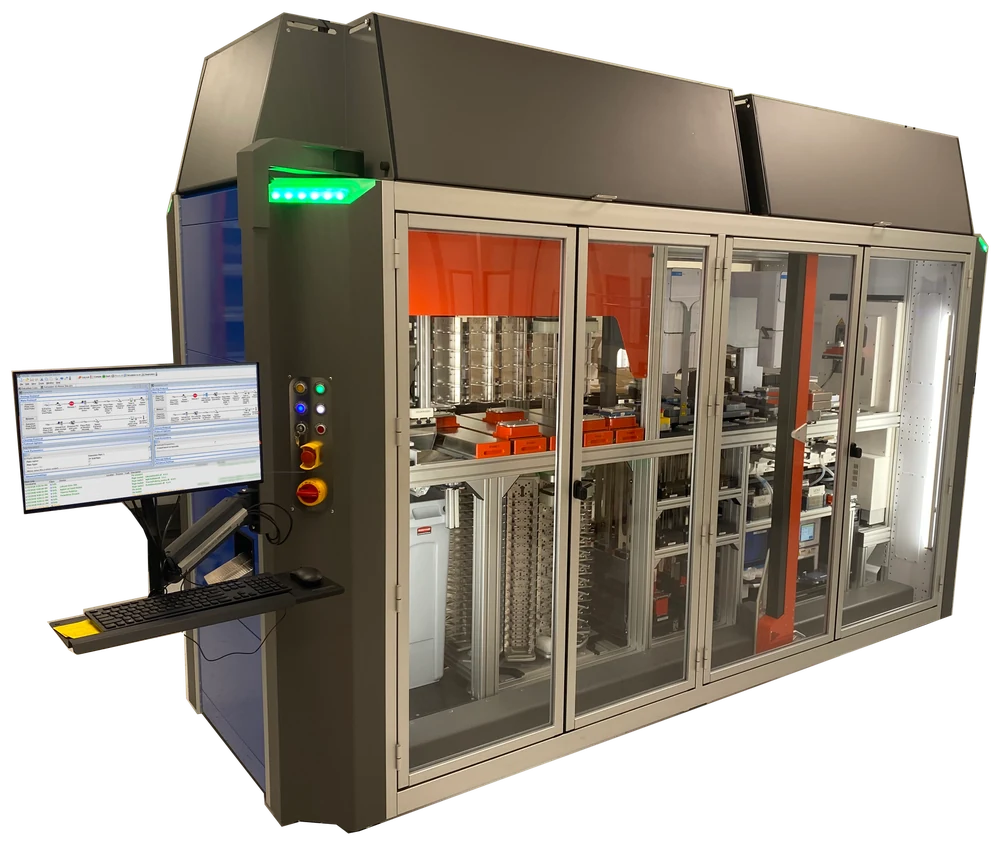
Bring instruments, robotics and storage together in one modular, vertical automation platform.
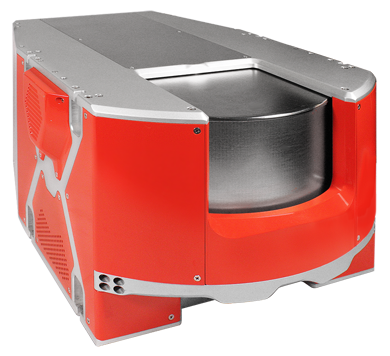
Robot-accessible centrifugation with imbalance monitoring before and during a run.
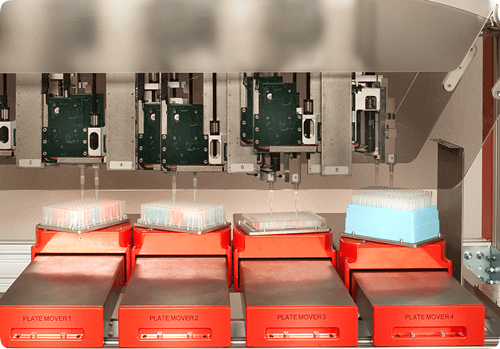
Flexible sample transfers and hit picking, with plates exchanged while pipetting continues.
Our applications team starts with your method and the constraints that matter to you.
Application discussion does not establish suitability for clinical use. Intended use, process validation and applicable requirements must be defined with your team.
Bring us your process. Let’s work through the possibilities.
No. HiG uses supported SBS-format labware within its model-specific limits. Bring the complete vessel or plate assembly, loaded weight and protocol for a fit review.
No. This is a starting point for an integration discussion. Suitability, process controls and validation depend on your intended use and specific configuration.